

Ice Age
By Iced_Fox_Studios

V 1.2.2

Welcome to Ice Age, an add-on by Iced Fox Studios for the ModJam 2026 competition, themed "Echoes of the Past". The idea is simple: imagine a Minecraft where the world never fully warmed up. Where ice and permafrost never went away. Where survival isn't just about creepers and zombies, it's about not freezing to death.
What does the add-on actually do?
In short, it adds a whole survival-by-temperature layer to the game, plus the tools, items and places to deal with it (and more coming). Everything we add is built around one big idea: the world remembers the Ice Age, and so should you.
You'll find:
- A temperature system that reacts to where you are, what time it is, what the weather is doing, what you're wearing, if your you´re standing near fire,…
- Capes and clothes made of pleistocene animals, proper prehistoric armor that actually keeps you warm.
- New biomes based on a real geological phenomenon from the far north.
- And more!!
The temperature system
Every player has a personal temperature measured in degrees Celsius. It changes constantly based on:
- Where you are. Cold biomes drop your temperature, warm ones raise it. The higher you climb, the colder it gets.
- What time it is. Night is colder than day. Midnight is the worst.
- What the weather is doing. Rain and thunderstorms push you further into the cold.
- Where you're standing. Stand in water, in powder snow, or right next to a block of ice and you'll get colder. Stand near lava or a campfire and you'll warm up.
If your temperature drops low enough, you start getting sluggish and eventually take damage from freezing. There are four states in total:
| State | What it means |
|---|---|
| Frozen | You're freezing. You move slowly and take damage over time. This is dangerous. |
| Cold | You feel it. You're slow, but you'll survive if you find warmth or shelter soon. |
| Neutral | The default. Nothing is happening to you, and that's a good thing. |
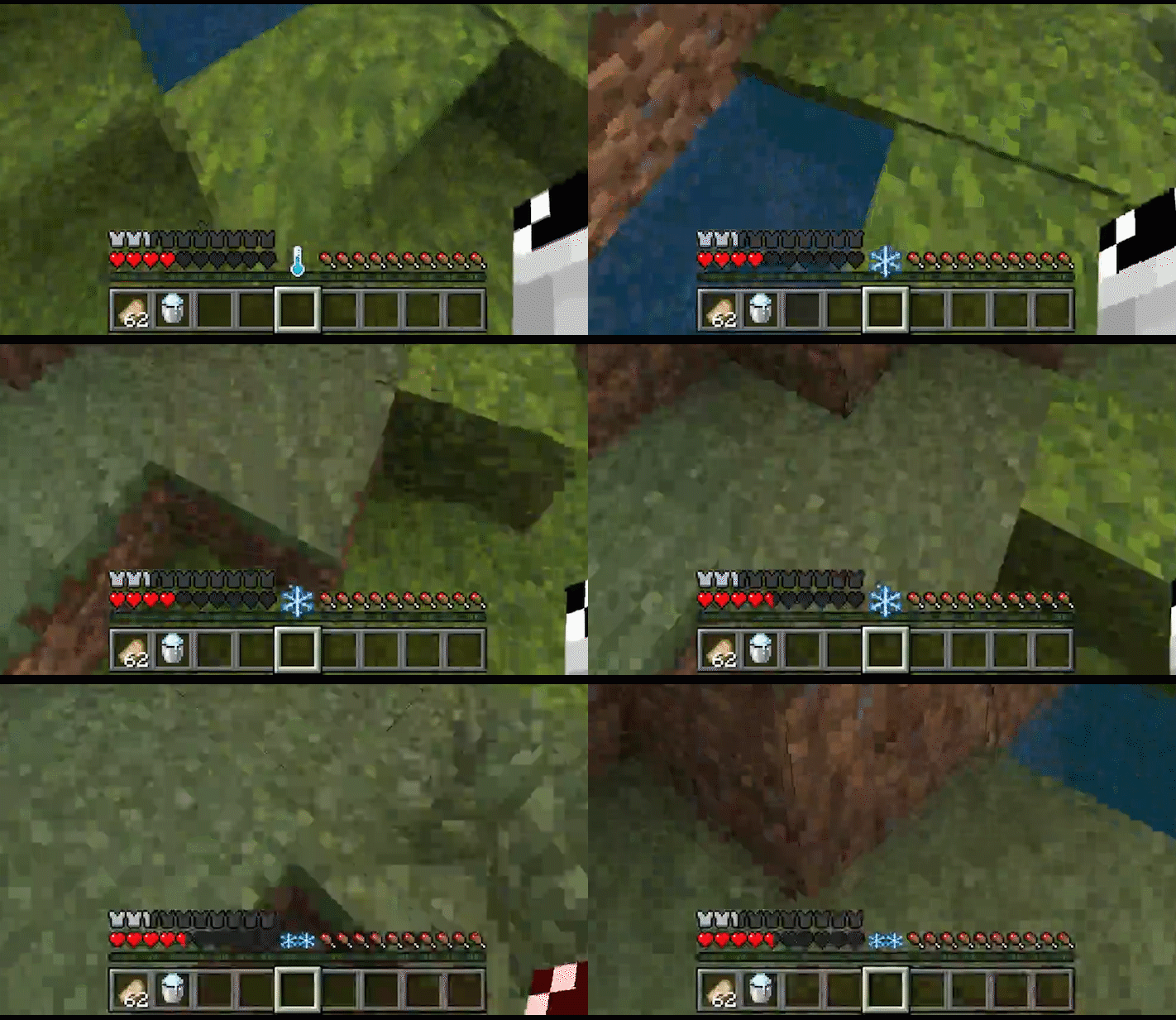
The system is designed to be visualize with some mini icons on your hotbar. For the moment the show the neutral, and several level of cold and frozen. This will be changed in the feature, these are temporal icons for the moment.
Tell us what you think about this icons!!!
Blizzards system
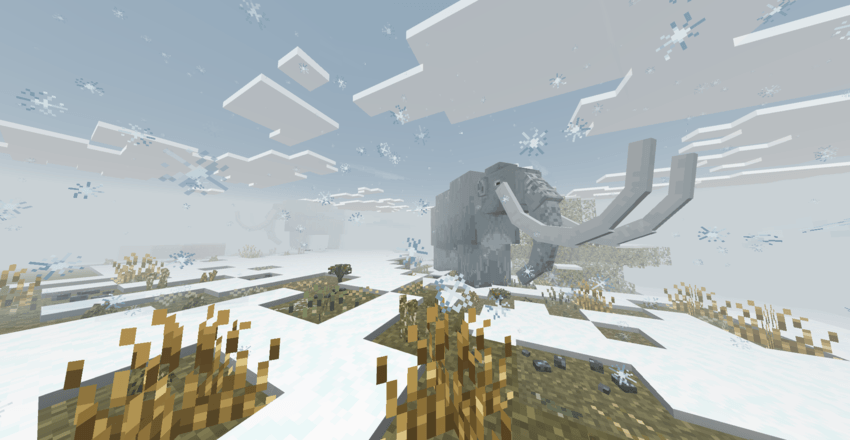
Blizzards are random natural events that sweep across the Mammoth Steppe region. The storm is shared by the world, but every player experiences it differently depending on:
- Where you are. Exposed highlands suffer stronger winds, while sheltered hollows collect more blowing snow.
- What is beneath you. Snow-covered ground gives the wind more loose snow to lift, creating dangerous ground blizzards.
- How exposed you are. A roof blocks most of the storm. A wall facing the wind also protects you, but hiding on the wrong side offers much less shelter.
- How strong the wind is. Gusts change in strength and direction, reduce visibility, push exposed players and can even move loose items.
- How prepared you are. The blizzard feeds directly into the temperature system. Warm clothing, nearby heat and proper shelter can prevent freezing.
Every blizzard develops naturally instead of appearing at full strength immediately:
| Phase | What it means |
|---|---|
| Warning | The wind begins to rise and the first snow starts moving. It is time to find shelter. |
| Onset | Snowfall thickens, visibility drops and gusts become stronger. |
| Mature | The storm reaches maximum strength. Whiteouts, violent gusts and extreme wind chill make travelling dangerous. |
| Decay | The front weakens, although exposed areas remain hazardous. |
| Residual | The last drifting snow, fog and cold slowly disappear. |
Blizzards combine several layers of snow, ice crystals, ground drift, fog and directional wind sounds. On less powerful devices, particle density is reduced automatically without changing the storm’s physics or temperature effects.
The system is designed to give you enough warning to react. A blizzard should feel like a real environmental threat that can be read, respected and survived—not just random damage from the sky.
Entities
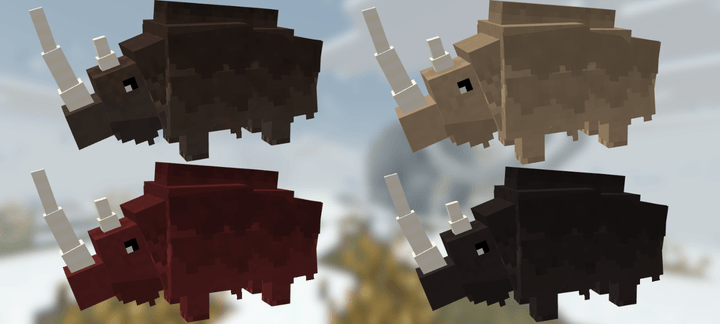
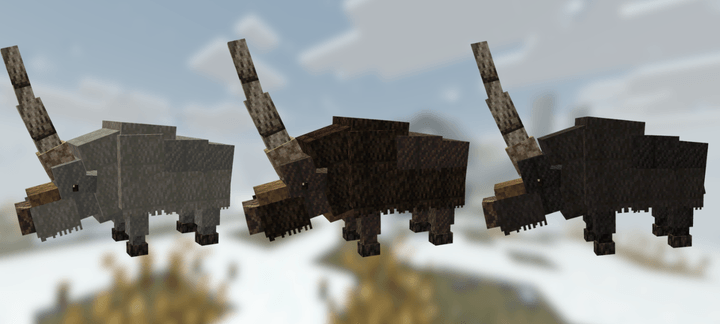
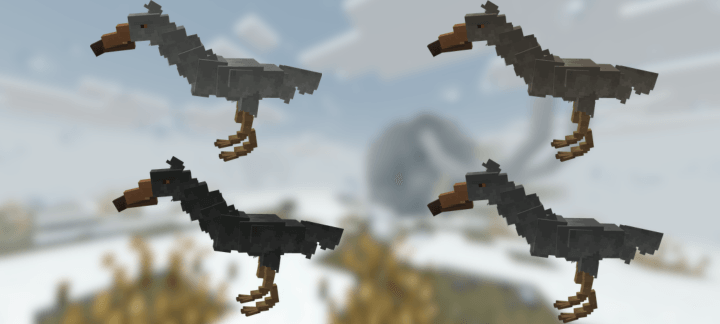
The Kelenken Tame it without luck: sneak behind it and feed it berries or raw meat three times. Saddle it and ride: beak peck and triple talon attacks, a chargeable leap, and safe gliding with no fall damage for anyone. Breed a pair and hatch the egg in a craftable nest, a back-carried brood harness, or steal eggs from wild nests in the heights. Chicks hatch already tamed.
New blocks
A full paleolithic camp. Roasting-spit campfires (in three regional woods) that batch-cook up to 3 pieces of meat; a deployable hide tent with an animated flap that seals blizzards out; palisades and gates; communal hide bedding that stores 6 hides and seats two players; hide drying frames; animal fat lamps; glacial hearthstones that give real warmth; rime lanterns; three resettable traps (snare, deadfall, covered pit); scree caltrops; loess daub walls; and stonecutter ivory figurines of the add-on's animals.
Plus the world blocks: three new tree species (relict larch, glacial willow, windswept birch) with full wood sets, steppe turf that megafauna tramples, loess, permafrost, wind-packed snow, and dozens of plants, minerals and snow formations that decorate the biomes and can be mined for their own resources.
New weapons, tools and gear
Flint — razor sharp and fast, but brittle. Paired with windswept birch rods.
Ivory — carved from mammoth tusks (each tusk yields 4 worked ivory). Medium durability, outstanding enchantability. Paired with relict larch rods.
Gelifraction rock — heavy, tough and built to last. Paired with glacial willow rods.
Every tree species gives you its own rods, so the arsenal you craft first depends on the land you settle in.
Ranged hunting. Three bows, three arrows: the standard flint arrow, the Kelenken-fletched arrow, and the heavy shale broadhead — kept in your off-hand it takes priority in any bow, hits harder and drops faster. And the moraine sling, a cheap early option firing moraine pebbles.
The skinning knife. Some animals leave a persistent carcass when they die. The knife is how you harvest it: hides, horns and all.
Armor that actually keeps you alive. The full woolly rhino hide set (13 protection), and its reinforced version — upgraded at the smithing table with thread and fur — which keeps the same protection, gains +30% durability and doubles the insulation.
And the small things. Ivory pendants and mammoth amulets for the off-hand — purely ornamental, no magic, just status. Because surviving the Ice Age is one thing; looking good doing it is another.
Clothes
The mammoth capes
To survive the cold, you need more than a torch. You need proper clothing.
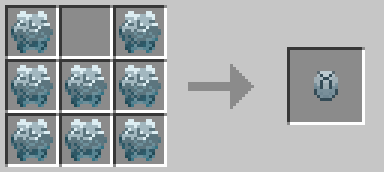
The add-on adds 13 different capes made from mammoth hide. There are two base capes (one for each kind of mammoth), and you can combine each one with a regular Minecraft chestplate to get a version that also keeps you warm.
The two types of mammoth:
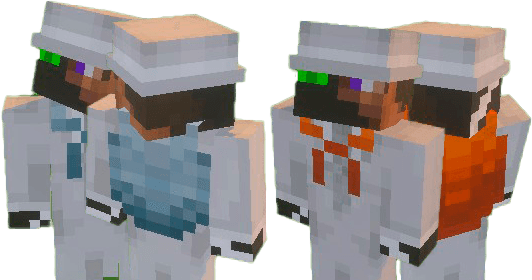 Woolly mammoth.
- Columbian mammoth.
The tiers (12 combined capes):
You can combine a base mammoth cape with any of these chestplates to get a stronger, more durable version that also looks the part:
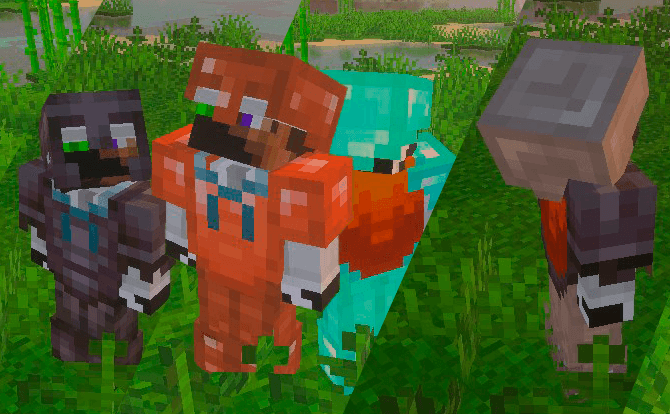
- Chainmail
- Copper
- Iron
- Gold
- Diamond
- Netherite
Important: the higher tier only changes how much damage the cape absorbs and how long it lasts. The warmth bonus is the same for all tiers of the same mammoth. A woolly cape made with chainmail keeps you just as warm as one made with netherite. The upgrade is about defense, not insulation.
How you make them:
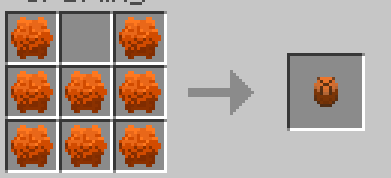
- A base cape (no chestplate) is crafted with 5 mammoth hides in a crafting table, in a specific shape.
- A combined cape is made by simply putting the base cape and the chestplate anywhere in your crafting grid (or your 2×2 inventory crafting). The order doesn't matter.

Biomes
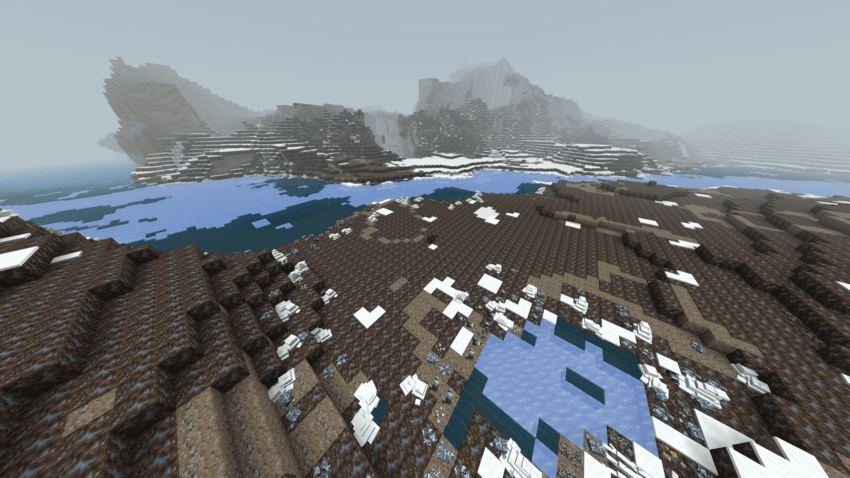
Thermokarst (More images on media!)
Inspired by a real geological process called thermokarst (check the real thing!!). Happens when permafrost (ground that's been frozen for thousands of years) finally thaws. The ice inside the soil melts, the ground collapses, and you end up with shallow ponds, mud, and a landscape that looks half-dead, half-alive.
We turned that into two biomes, representing the two stages of the process:
Thermokarst Pond (the active, wet stage)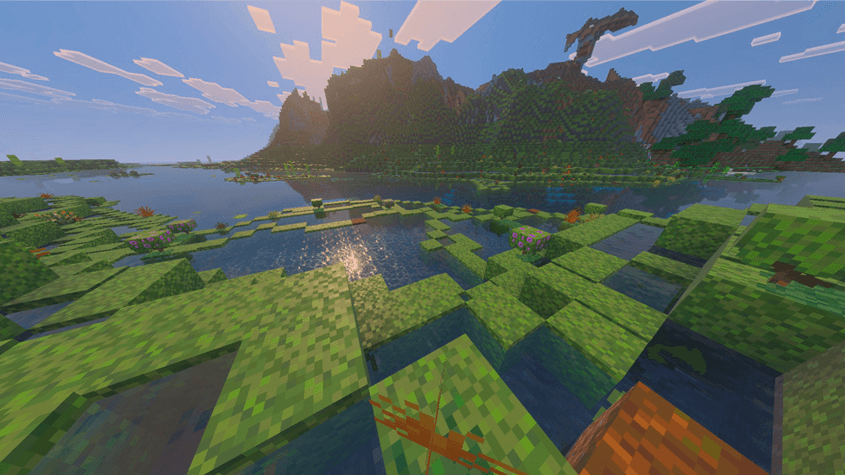
This is the biome you find when the permafrost is actively thawing. There are shallow pools of water, green moss, and a kind of cautious, half-alive vegetation clinging to the edges. It looks like the world is exhaling after a long, cold sleep. It also tends to be quite cold, so don't wander in without warm clothing.
Pale Thermokarst Pond (the dry, dead stage)
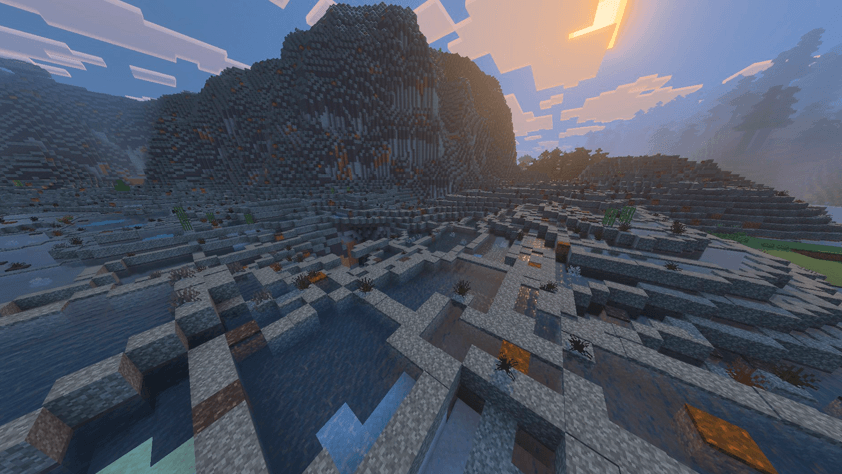
This is the same biome, but later. The water remains,but the moss is pale, and the vegetation ha
s mostly died off. The ground is exposed, dry and cracked. It's even colder than the active stage, because there's less greenery to break up the wind.
Mammoth Steppe
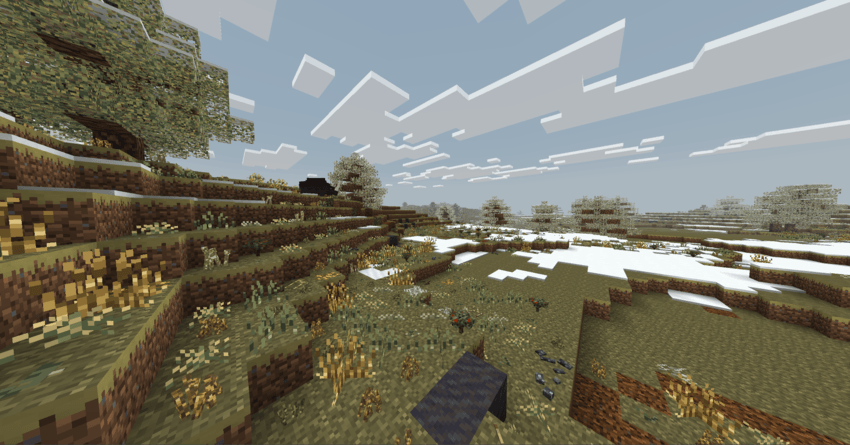
The heart of the add-on. A lost grassland that once wrapped around the whole northern world: a near-endless carpet of ochre grasses over loess soil, dotted with relict larches, ephedra shrubs and the bones of older giants half-buried in the ground.
This is where the herds live. Mammoths, woolly rhinos, bison and megaloceros all graze here — and where herds gather, predators follow: cave hyena clans, wolverines, and the Kelenken. It's not the coldest biome, but don't mistake "not the coldest" for "safe".
Glacial Hollows
The low country the glaciers left behind. Pale moraine ground, frost-dusted erratic boulders dropped by retreating ice, veins of raw permafrost, and groves of gray glacial willows bent sideways by years of wind.
Being low ground, it collects whatever the wind carries: during blizzards, drifting snow piles up here faster than anywhere else. Sheltered from the worst gusts, buried under the worst snow. Pick your trade-off.
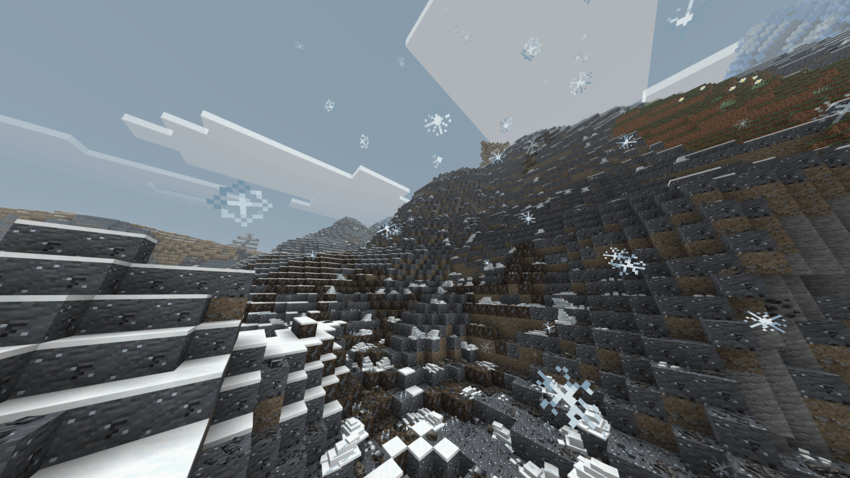
Windswept Heights
The exposed highlands, where the wind never stopped. Angular scree underfoot, stone slabs aligned by centuries of gusts, ventifacts carved into strange shapes, and wind-bent boreal birches clinging to the ridgelines.
Up here the blizzards hit at full strength and the cold is relentless — but the heights hide their rewards: wild Kelenken nests with eggs ready to steal, flint nodule clusters, and mineable formations found nowhere else. High risk, high everything.
What's not in the add-on (yet)
We're not done. Here's what's still on the list:
- Frozen methane lakes, dangerous lakes of ice with pockets of trapped methane waiting to be discovered.
- A much more realistic cold system.
- Lots of new Ice Age animals: saber-toothed cats, Elasmotherium (the Siberian unicorn), cave hyenas, wild asses, prehistoric frogs, giant ground sloths, and more.
- Many more biomes: tundras, boreal forests, dry steppes, and other landscapes from the Pleistocene.
- More plants and foods from the era.
- Natural effects and cycles: Milankovitch cycles driving long-term climate shifts, slow changes you can actually feel in the world.
- Full Wiki
- … and much more.
About us, yes US!
We want to know if you actually enjoy this kind of add-on,and if you'd like us to keep making more. To be honest, developing Iced Age has been a lot of fun, and having the community's support makes the whole process even better. Your feedback, your ideas, your bug reports; they all shape what this add-on becomes.
So if you have any idea, spotted an error, or just want to tell us what you think, we'd love to hear from you. Seriously. Every message matters, and it helps us keep going in the right direction. Thanks in advance.
Credits
- XtraGer_Dev —> Developer.
- Circexya -> Artist.
- PriliaDev —> Developer.
- Doodles -> Artist.
Made with care for the ModJam 2026 competition, themed "Echoes of the Past".
Changelog
Initial Release Pre-Alpha
- Temperature system, thermokasrst biomes, mammoth,rhinoceros,capes,...
Version 1.0.0
- Mammoth stepe
- New entities
- Blizard systema
- New clothes based on entities skins
- New set of tools
Version 1.1.0
- Added the Kelenken as a new ecosystem creature, featuring four visual variants, natural spawning, unique loot, and edible meat.
- Expanded mountain biomes with snowdrifts, scree, shale formations, wind-carved ventifacts, glacial stones, frost crystals, and flint nodules.
- Added hide shelters, seats, communal beds, palisades, gates, and rustic campfires crafted from all three wood families.
- Introduced new recipes, food items, and loot tables.
- Reworked textures for wood sets, froststone tools, flint equipment, berries, and woolly rhinoceros horns.
- Improved woolly rhinoceroses and mammoths with saddles, saddlebags, beds, footprints, hide processing, and more reliable interactions.
- Greatly expanded the blizzard event and fully synchronized it with the temperature system.
Version 1.1.1
- French and German translations
Version 1.1.2
- Brazilian Portugues and Italian translations
Version 1.1.3
- Japanese and Russian translations
Version 1.1.4
- Fixed Error Translations
Version 1.2.0 Major Update
This release delivers a Vibrant Visuals-specific calibration pass for the blizzard while preserving its established Classic and Fancy appearance.
Deferred rendering now restores and increases storm particle density, with more readable particle sizes and softer alpha. Snow and ice particle atlases now include PBR MERS material data, while improved Henyey-Greenstein (H-G) volumetric scattering gives the storm greater depth and more natural light transport.
Blizzard gameplay, timing, temperature, exposure, shelter and damage behavior are unchanged. All ten supported languages remain included.
Enjoyed this addon? Discover more on our official website and be the first to try new updates!
👉 [Visit Official Website]
💬 Connect with us on Discord – share feedback, report issues, and join the fun!
👉 [Join Discord – Click Here]
⚡ By Iced Fox Studios – Rate ⭐, share, and stay tuned for more!